Showing posts with label christian news. Show all posts

Indonesia, The Philippines and Vietnam - Not Just Prayers!

Cafod, Christian Aid, Tearfund and World Vision have teams or partner teams responding in Indonesia, The Philippines and Vietnam.
In Indonesia, where latest reports put the death toll at more than 700 with over 300 people still missing, some 200,000 houses have been either damaged or destroyed. There is an increasing urgency to reach the rural villages around the flattened city of Padang that are among the worst affected by the earthquake.
Sibirani, Executive Director of Tearfund’s partner agency KOTIB, speaking from a village where 90 per cent of houses have collapsed, said that people are still sleeping outside their collapsed houses without tents or blankets.
"They are eating food that they can find from within their collapsed houses or what we are giving them," said Sibirani.
"The mosque is currently the food distribution centre because that is one of the few buildings that has not collapsed. There are still some people buried in houses but many areas are inaccessible by vehicle because of the many landslides, especially in the hill areas away from the coast."
Medical supplies are urgently needed for many people that have been injured.
"There are not enough medicines and people are becoming sick with no protection from mosquitoes," added Sibirano. "People only have the clothes they were standing in and no other possessions as everything is buried in the rubble."
Cafod are also reaching remote villages in the region and are distributing tarpaulins to families yet to receive any direct aid, over a week after the earthquake. Caritas, a partner agency of Cafod, is providing temporary shelter for 1600 families who were unaware that there were international efforts underway to assist them.
World Vision was on the ground and able to respond quickly across the region.
"In Indonesia, we’re distributing emergency kits, including shelter and provisions for clean water to tens of thousands of people," says World Vision UK Chief Executive Justin Byworth.
"In Vietnam, we're providing relief food assistance to 24,000 people, and in the Philippines, our staff and a huge number of volunteers are working with affected children and families, to help them recover.
"In all three countries, the recovery of children is our focus. We are running a number of Child Friendly Spaces, providing safe places for children to learn basic skills to cope with the shocks and losses they've experienced."
Christian Aid’s Indonesian partners are providing food and essential items, clean water and medical teams to help meet the immediate humanitarian needs of up to 50,000 families - approximately 250,000 people. The programme will then begin to help communities rebuild their homes and livelihoods.

Radio 4 - Thought of the Day to change! Who thought of that?


Christians have responded with concern to an announcement by the BBC this week that it is considering opening up up Thought for the Day to secularists and humanists.

Thought for the Day is a three-minute religious slot on BBC Radio 4 for faith leaders to share their views on topical issues.

The BBC has come under pressure in recent years from secularists and humanists to open up the slot to non-religious views, with a non-religious "Thought for the Afternoon" being broadcast for the first time in January.

The proposal was announced on Monday by Radio 4's controller Mark Damazer. He said: "There may well be quite a strong argument for including secularists and humanists."

He said the proposal was being considered by the BBC Trust with a view to reaching "some kind of conclusion" later in the year.

The General Director of the Evangelical Alliance Steve Clifford was among Christians saying Thought for the Day should remain religious.

"It strikes me that the secularists predominate in the other 2 hours and 55 minutes [of the Today Programme], so is it really asking too much for religion to just have a small chunk of dedicated time?” he said.

The General Secretary of the Methodist Church, Martyn Atkins, said that while faith-based communities did not "have a monopoly on 'thoughts', the BBC had a "challenge to represent a variety of views in society".

"“Faith-based communities have a distinctive voice, and large numbers of people listen to Thought For The Day for that very reason, so I would be saddened to lose those crucial few minutes of spiritual reflection," he said.

He continued, "It is important that this slot remains available as a pause to reflect on spiritual or ethical issues ... Methodists are not afraid to be challenged about what we believe, and we are not threatened by hearing secular voices on Thought for the Day.

"But we, along with other Christians, will hope to continue to be given opportunity to speak of the things that matter so deeply to us.”

Stuck for somebody to pray for?


More than one thousand people have fled from a camp for internally displaced people in Burma’s Karen State amid fears of an attack by the Burmese Army.
Christian Solidarity Worldwide (CSW) said it had received reports indicating an attack on the IDP camp at Ler Per Her by Burmese Army infantry and the pro-regime militia group, the Democratic Karen Buddhist Army.
CSW’s Advocacy Director Alexa Papadouris said Burma Army troops could attack within hours.
“This is an urgent situation which requires immediate international attention,” she said.
The camp has been forced twice before to relocate as a result of attacks. The latest threat has prompted the camp’s 1,200 IDPs to flee across the border to Thailand.
During previous visits to the camp, including one earlier this year, CSW heard first-hand accounts from IDPs of forced labour, rape, torture, the destruction of villages, crops and livestock, and the use of human minesweepers at the hands of the military regime.
Ms Papadouris said people in Karen State had been suffering attacks and gross violations of human rights “amounting to crimes against humanity” for several decades.
She urged the international community to bring an end to the crisis in eastern Burma.
“We call on the UN Security Council to impose a universal arms embargo on Burma’s military regime, and to establish a commission of inquiry into crimes against humanity,” she said.
“We urge the authorities in Thailand to provide shelter and protection to the Karen from Ler Per Her, and we urge members of the Association of South-East Asian Nations (ASEAN), China and India to use their collective influence with the regime to call a halt to such offensives against civilians.”

Credit Crunch - Greater Meaning


New research out this week has revealed that three in four adults are rethinking their core values and big issues like ‘the meaning of life’.
Out of 2,500 adults interviewed by Christian Research in April, 70 per cent agreed they were searching because of the credit crunch, or worries about personal finances and job security.
The search for meaning was found to be occurring to similar degrees among the young and old, in both genders and across all social grades except the very lowest.
The research found that most people were turning first to family and friends to discover their meaning. Fifty-six per cent of those interviewed said they had considered spending more time with family and friends, while 50 per cent said they had actually done it, and of those, 47 per cent said it had been worth it.
“This is a sign that when things are crumbling down, people are looking for love and to be loved,” said Benita Hewitt, Director of Christian Research, who presented the findings at the Christian Resources Exhibition on Tuesday.
“Jesus said to love one another and that’s what people are doing,” she added.
The second most popular way of finding meaning was in contacting past friends. Thirty-six per cent of respondents said they had considered contacting past friends, while 31 per cent said they had actually done it.
“This is also a sign of the need to love and be loved,” said Ms Hewitt. She pointed to similar conclusions drawn by Christian dating agency Christian Connection, which has reported a 40 per cent increase in subscribers during the credit crunch.
The research also found that people were considering finding meaning by doing voluntary and community work. Although 24 per cent had considered it, however, only 13 per cent had actually done it.
“The church can maybe think about how it can help people to actually do some voluntary work,” said Ms Hewitt.
More than voluntary work, 14 per cent of those searching said they had tried prayer, with 12 per cent saying they had found it worthwhile.
The research also threw up some challenges for the church, however. While 23 per cent of unchurched respondents said they were searching, only three per cent said they had considered going to church. Of them, only one per cent actually went – equivalent to around 60 respondents – and none said they would go again.
“This presents a real challenge for the church,” said Ms Hewitt. “Research also shows that the Dow Jones plummeting has not affected churchgoing. We’re not on the spiritual map at all.”
Christian Research found that out of the non-religious respondents, 45 per cent said they had turned to family and friends, 25 per cent to past friends, eight per cent to voluntary work, eight per cent to an art or music hobby, and another eight per cent to reflective time alone.
“The research shows that if you are from a church background, then going to church helps, but if you are among the unchurched then they don’t find it helpful. More than that, they aren’t even going in the first place,” said Ms Hewitt.
She added: “Our message to all Christians is to remember that three out of four people you know are looking for more meaning and now is the time to talk to them about that. They are looking for meaning in relationships, in love, in community, and that’s what we can give them.”

I don't know what has been in your prayers but....!


total of 159 people have died of pneumonia that may have been caused by the mutant H1N1 virus, Jose Cordova, the health secretary, said. Ten of those had died in the last 24 hours.
However, there had been a substantial slowdown in the number of fatalities compared to the period from Sunday to Monday, when 46 people died in a 24-hour period, he said.
Mr Cordova said that the drop in deaths was due to people taking anti-viral drugs soon after they started displaying symptoms.
The first victims were treated with antibiotics and other flu medicine as Mexican health workers struggled to find out what was going on.
"It is crucial to treat the problem early, preferably within the first one or two days," Mr Cordova said.
Mexican authorities have also revised down the confirmed death toll from swine flu from 20 to seven. No one outside Mexico has died.
Despite the slowdown in deaths, the overall number of people hospitalised with swine flu symptoms has continued to rise
By Tuesday night, there had been a total of 2,498 taken into care with respiratory problems believed to be related to swine flu. Of these 1,311 were still bed ridden and fighting the sickness while the others had left after successfully responding to treatment.
Mr Cordova expressed hopes that the infection rate would drop in the next few days thanks to shut downs of public places including schools, cinemas, bars, museums and other spaces.
"These next few days are crucial in seeing how the virus threat will develop," he said, describing the situation as "more or less stable".
In response to the spread of the disease, Mexican authorities have banned restaurants and cafes from serving all food except take away. Schools have also been closed.

Fresh Confidence -


The church in the UK is regaining its confidence as it lives out the Gospel in local communities, says the new head of the Evangelical Alliance.
In his maiden speech as the new EA General Director on Easter Sunday, Steve Clifford stressed the importance of demonstrating the Gospel.
“It is wonderfully encouraging to see how the Church of Jesus Christ is finding fresh confidence, as we position ourselves in the heart of our communities and as we demonstrate the Gospel through our being good news as well as talking good news,” said Clifford, former Chair of Hope08.
“I am absolutely convinced that Christians uniting together in their faith is good for our society. It offers communities and individuals health and well-being, physically, emotionally, and spiritually. Christ has called us as his Church to be the hope for our nation.”
He urged Christians to match their words with actions and be 'good news' for those around them.
“We must have confidence in the Gospel story. Alpha and Christianity Explored courses, as well as our ‘gossiped’ conversations with our neighbours, friends and workmates, all have the power to impact lives.”
Clifford delivered his address at Bradford Cathedral, where his parents met and were married and where his father was ordained.
He went on to offer a message of hope as he reflected on the difficulties his family faced after his father died when Clifford was only five-years-old.
“This little ‘Clifford’ story is part of a far bigger story which is the story of God’s involvement with humanity,” he said.
“God hasn’t abandoned us and is able to draw a bigger circle out of even some of the most tragic events of life. God is wheeling and dealing in our lives, our stories, looking to see his purposes at work right across the face of the earth.
“Our stories and God’s stories merge as we allow ourselves to be caught up in his purposes and look for the out working of his will in our lives.”
The Bishop of Bradford, the Rt Rev David James, was joined by Clifford’s mother and son in praying him into his new role at the end of the service.
Clifford takes over the position of General Director from Joel Edwards, who stepped down last year after more than 10 years in the job to concentrate on his new role as international director of Micah Challenge, a movement of Christians lobbying their governments to fulfil the Millennium Development Goals by 2015.

Church defends hospital chaplains from secularists

The Church of England has defended the role of hospital chaplains after the National Secular Society (NSS) called for the NHS to stop its funding for spiritual representatives in hospitals.

The NSS said it had contacted 233 acute and mental health trusts in the UK and found that they spent £26.72 million on chaplains from various denominations and religions.

The NSS claimed that the actual cost of chaplains in NHS hospitals, after adding building upkeep, administration and other extra costs, could be “conservatively” estimated at £40 million.

NHS guidelines say that patients should be able to hold religious services and should have access to a place to pray and a representative from their religion.

The NSS argues that funding for chaplains should come from the churches, on the grounds that chaplains are carrying out the “fundamental responsibility” of the church rather than that of the NHS.

According to the BBC, Terry Sanderson of the NSS said, "Most people who go into a hospital come from the local area and it would be better if their own vicar, priest, rabbi or imam came to see them if they felt in need of religious support.

"This could be done as part of the clergypersons' regular duties - it should not fall as a burden on the NHS."

A Church of England spokesman responded to the comments by saying, "Spiritual healthcare has long been acknowledged, by both medical practitioners and the churches, to be an intrinsic part of caring for people in hospital. NHS Trusts pay for chaplaincies because they see them as part of their duty of care to patients, not because the churches force them to."

The Government also defended the role of chaplains, with a Department of Health spokesman saying it was "committed to the principle of ensuring that NHS patients have access to the spiritual care that they want, whatever faith or belief system they follow”.

The spokesman added: "Chaplains do an extremely demanding job, often in difficult circumstances, and their skill and dedication is highly valued by patients, relatives and staff within the health service."

I have never heard of anything so daft!!! - 2 PC hits CofE!


Church of England Bishops have rejected a request to ring out the bells of churches on St George’s Day.
The idea to ring out the bells was suggested by churchgoer Libby Alexander, who wrote to each of the 44 Church of England diocesan bishops suggesting the idea.
Only five of them responded positively to the idea, whilst more than half did not respond to the letter.
In her letter, Alexander said that church attendance was falling because of “the lack of assertiveness or confidence emanating from the top… [and the] strangulations of political correctness”, reports the Daily Mail.
She also encouraged the bishops, “What an uplifting, wondrous sound it would be if bells rang out to remind the country that Christianity exists and that churches are there to welcome."
However, the Bishop of Ripon and Leeds, the Rt Rev John Packer, responded saying, “I am not sure assertiveness is a Christian value.”
The Bishop of Portsmouth, the Rt Rev Dr Kenneth Stevenson, also expressed concern that “some secularists would claim the Church was imposing its beliefs and practices on the whole population”.
The Rt Rev Dr Peter Foster, Bishop of Chester, said meanwhile, “There would be dangers in putting on ‘public displays’ of confidence.”

Something to pray about.. (in case you're stuck)


SEOUL, South Korea (AP) — Japanese, South Korean and U.S. missile-destroying ships set sail to monitor North Korea's imminent rocket launch, as Pyongyang stoked tensions Monday by detaining a South Korean worker for allegedly denouncing the North's political system.
North Korea says it will send a communications satellite into orbit between April 4 and 8. The U.S., South Korea and Japan suspect the regime is using the launch to test long-range missile technology, and warn it would face U.N. sanctions under a Security Council resolution banning the country from any ballistic activity.
North Korea has threatened to quit international talks on its nuclear disarmament if punished with sanctions. The communist regime's main newspaper, Rodong Sinmun, reiterated that warning Sunday, saying the talks will "completely collapse" if taken to the Security Council.

Film Night

FAFF Film Night - Great nibbles provided and a great crowd but unfortunately it had to be cancelled due to bad light!

10,000,000 Baptisms in Africa

The Africa Assemblies of God Alliance (AAGA) has set out to baptise 10 million believers within a 10-year period, reports the denomination’s news agency.
AG African leaders committed themselves to the “Decade of Pentecost” at an AAGA meeting in Johannesburg, South Africa, earlier this month that occurs once every four years.
Spearheading initiatives for the Decade of Pentecost will be Acts in Africa, a ministry aimed at encouraging Pentecostal revival in the Assemblies of God in Africa.
During the Decade of Pentecost, which will begin in 2010 and continue through 2020, national Assemblies of God churches will mobilise for global missions with the vision of reaching “yet-to-be-reached” peoples in Africa and the world with the Gospel, according to AG News.
AAGA’s strategies for achieving its goal include an annual Pentecost Day when about 48,000 AG pastors will be challenged to preach on the “baptism in the Holy Spirit and the mission of God” and pray with believers to be filled with the Holy Spirit.
There are about 16 million AG members meeting in more than 50,000 churches in 50 countries in sub-Sahara Africa and the Indian Ocean Basin, according to the denomination. In 1990, there were only 2.1 million constituents and 12,000 churches.
The Assemblies of God is the world’s largest Pentecostal denomination with somewhere between 57 to 60 million adherents.
Three decades ago, the combined total of Pentecostals and Charismatics was less than 5 per cent, now they make up some 17 per cent of Africa’s population, or about 147 million people, according to a 2006 Pew Forum study that highlighted the dramatic growth of the movement within half a century.
"Pentecostalism's dramatic expansion has left almost no part of sub-Saharan Africa unaffected," stated the Pew Forum. "If Pentecostal churches continue to grow in numbers and activism, the long-range political impact of Africa's vibrant Pentecostal community will become increasingly difficult to ignore.”
The Pew Forum report on Pentecostalism in Africa was one of three parts that also examined the movement’s growth in Asia and Latin America.

Anyone else catch this? Not much said in the press!!!


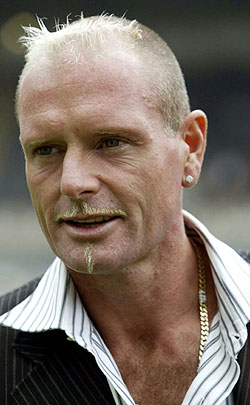
Anyone else here a fan of soccer genius Paul Gascoigne? Over the years I've followed his career with desperate fascination as he has hurtled down towards the bottom of the cliff, wanting to reach out and not knowing how.

As a one-time journeywoman along that 'road most travelled', I feel a gruesome horror when watching another flawed human being in the grip of compulsions they cannot believe they cannot control, lurching from one disaster to the next, pursued by those hideous 'horsemen of the apocalypse'.

All around, all the time, there are others making that same journey. Most never 'get off the lift'. When they do, they often rarely stay off it. Death or insanity are too often the result. But I've seen others, deemed beyond hope by all who know and love them including me, make incredible recoveries.

Gascoigne credits his new-found faith in God. 'I just thank Him for today. If I don't drink, I just say thanks.'

An old friend of mine, Andre, used to say: 'When even one man or woman gets to this place, all the angels in heaven are silent in awe.' I believe that's something of what Jesus meant when he talked of not even one sparrow falling without God knowing of it.

Judging by this interview that I caught on Sky this morning, Paul Gascoigne has finally got it. I really never thought he would, and can only pray silence in awe.


Ruth Gledhill is The Times Religion Correspondent. In this blog she offers her views on the issues of the day. Your responses are invited.

£15.5m to repair churches from English Heritage.


English Heritage and the Heritage Lottery Fund have allocated 15.5 million pounds to help with urgent repairs on some of the oldest churches, chapels and synagogues in England.

Beneficiaries include St Mildred’s church, a Grade I listed building on the Isle of Wight, that was designed by the husband of Queen Victoria, Prince Albert. Both worshipped at the church, which has been awarded £208,000 to help repair the roof. Queen Victoria’s youngest daughter, Princess Beatrice, was also married and buried there.

Speaking to Church Times, Rev Jonathan Hall, the Rector of the church said, “When she came here to worship, she used to sit on a simple chair, upholstered in blue velvet in the side aisle, which has its own private entrance. The new grant will enable us to retile the chancel and the Royal Pew roof, as well as take down and rebuild the bell tower.”

He said that the church had already been given a grant of £216,000 to repair the roof of the main tower.

The church to receive the biggest grant was the independent Congregational church, the Union Chapel in Islington, which received a grant of £421,000.

The New West End Synagogue in Bayswater, London, also received a grant of £108,000.

The Rabbi Geoffrey Shisler said, “We are extremely grateful to receive this grant. It is not just important to our Jewish community, but important to the whole of England to have historic buildings, like our magnificent synagogue, that we can be proud of.”

Prayer Day for State of the Nation!


“Your Kingdom come, Your will be done” was the prayer of hundreds of Christians who gathered at a central London church on Saturday to cry out to God over the moral and spiritual crisis in the UK.

The State of the Nation gathering also focused on repentance over the church’s silence in the face of immoral legislation passed over the decades, particularly in the areas of the unborn child and marriage. All mainstream denominations were represented at Saturday’s gathering at the Emmanuel Centre, near the Houses of Parliament. Prayer gatherings were also held in Birmingham, Manchester and Edinburgh and in countries around the world, including the US, Germany and Australia, in an expression of solidarity with the London meeting. The day of prayer and repentance was organised following a meeting at the House of Lords last December of some 80 Christians from the church, the Houses of Parliament, and the business and education sectors. The meeting focused on the moral and spiritual implications of the financial crisis and concluded with a call for a season of prayer and fasting for the UK. David Noakes, a member of the State of the Nation facilitating group, said the prayer meeting was possibly the most important gathering since World War II.

“Only then it was a nation. Now it is a remnant people. But don’t be dismayed that it is a remnant,” he said, pointing to the battle won by the Lord with the 300 warriors of Gideon. Mr Noakes chided the church for failing to speak out against ungodly legislation and urged the church not to be swayed by political correctness. “God is not politically correct but biblically correct,” he said, adding that the church needed to cast out the sin within its own ranks and return to a fear of the Lord. Mr Noakes ended with a note of encouragement, saying that God had not forgotten about Christians in Britain because of the country’s special history and that the despair brought on by the financial crisis would prompt more people to turn to God.

“There are many people in great despair because the whole world system is coming down around them. God will bring many people into the light of salvation out of that darkness and they will come back again to a fear of the Lord.”

Never thought I would put an article about Jade Goody here!


Terminally ill Jade Goody is looking forward to the christening of her sons next weekend. Fresh from her wedding to Jack Tweed last Sunday, Goody is focusing on preparations for the christening of sons Bobby, five, and Freddie, four. According to her publicist, Max Clifford, the christening will take place next Saturday at a church near Goody’s home in Upshire, Essex.

“She is looking forward to the christening,” said Mr Clifford. “She is planning it with friends and family.”

Goody made the decision to christen her sons after being told by doctors last month that her cancer was terminal. She said she wanted to christen them and teach them about Jesus so that they would know their mummy was looking down on them from Heaven. The christening will be performed by independent Bishop Jonathan Blake, who also performed Goody’s wedding to Tweed. Mr Clifford said Goody wanted to throw a big party for her boys.

“It will be a local church then a party for all the children. She wants to make it as big a party as possible. She is going to get christened herself as well. She wanted to do that.”

The former Big Brother contestant’s condition is said to be deteriorating. She is being cared for at the St Clare Hospice in Hastingwood, near Harlow, Essex, after being taken in for treatment on Friday following hallucinations. A friend of Jade told the Sunday Mirror she was in utter pain and had said she feared not making it to the weekend. Bishop Blake has offered to hold the christenings wherever is easiest for Jade.

He was quoted by The Daily Mail as saying: “The christening can happen anywhere, inside or outside, there are no restrictions. It can even be carried out in the hospice, if that’s where Jade wants it. It would not matter one iota if she is bedridden. The family have asked me to keep quiet about the ceremony they want and I must respect their privacy. She knows I am there for her when she needs me.”

Shrove Tuesday - Pancake Day

Delia Online!!
Ingredients
For the pancake mixture:
110g/4oz plain flour, sifted
pinch of salt
2 eggs
200ml/7fl oz milk mixed with 75ml/3fl oz water
50g/2oz butter
To serve:
caster sugar
lemon juice 
lemon wedges
Raisens!!!!

Method
Sift the flour and salt into a large mixing bowl with a sieve held high above the bowl so the flour gets a airing. Now make a well in the centre of the flour and break the eggs into it. Then begin whisking the eggs - any sort of whisk or even a fork will do - incorporating any bits of flour from around the edge of the bowl as you do so.

Next gradually add small quantities of the milk and water mixture, still whisking (don't worry about any lumps as they will eventually disappear as you whisk). When all the liquid has been added, use a rubber spatula to scrape any elusive bits of flour from around the edge into the centre, then whisk once more until the batter is smooth, with the consistency of thin cream. Now melt the 50g/2oz of butter in a pan. Spoon 2 tbsp of it into the batter and whisk it in, then pour the rest into a bowl anduse it to lubricate the pan, using a wodge of kitchen paper to smear it round before you make each pancake.

Now get the pan really hot, then turn the heat down to medium and, to start with, do a test pancake to see if you're using the correct amount of batter. I find 2 tbsp is about right for an 18cm/7in pan. It's also helpful if you spoon the batter into a ladle so it can be poured into the hot pan in one go. As soon as the batter hits the hot pan, tip it around from side to side to get the base evenly coated with batter. It should take only half a minute or so to cook; you can lift the edge with a palette knife to see if it's tinged gold as it should be. Flip the pancake over with a pan slice or palette knife - the other side will need a few seconds only - then simply slide it out of the pan onto a plate.
Stack the pancakes as you make them between sheets of greaseproof paper on a plate fitted over simmering water, to keep them warm while you make the rest.

To serve, spinkle each pancake with freshly squeezed lemon juice and caster sugar, fold in half, then in half again to form triangles, or else simply roll them up. Serve sprinkled with a little more sugar and lemon juice and extra sections of lemon.

Fairtrade Fortnight 2009 (but why not threehundredandsixtyfivnight?)


Thousands of events from banana-eating competitions to fashion shows will take place across the UK over the next two weeks to encourage more people to buy Fairtrade and support farmers in the developing world.

Organisers of Fairtrade Fortnight, the Fairtrade Foundation, say that the credit crunch is making it even more difficult for poor families to cope with rising global food costs and even more vital that people buy Fairtrade.

“The Fairtrade Foundation’s message for Fairtrade Fortnight 2009 is that, while sales of Fairtrade products and awareness of Fairtrade has been growing apace in recent years, change is still not happening nearly quickly enough for the millions of the world’s poorest farmers who remain trapped in trade poverty,” said Harriet Lamb, CEO of the Fairtrade Foundation.

“The challenge now is to urgently scale up the reach and impact of Fairtrade so that by working together, we can succeed in tipping the balance of trade in favour of marginalised farmers and producers. Fairtrade Fortnight is an opportunity for us all to do something too by holding events at work, at home or in the community.”

The sale of Fairtrade products currently benefits 7.5 million farmers, workers and their families who live in impoverished rural communities in the developing world.

Over the next two weeks, debates on trade, climate change and ethical shopping will be held in Oxford, Cardiff, Birmingham, Edinburgh and Leeds. The Great Trade debates will explore the various issues in relation to marginalised farmers and workers and the role that Fairtrade is playing.

In addition, more than 20 farmers from Sri Lanka, Cameroon, Burkina Faso and St Lucia will visit schools, businesses and community groups across the UK to explain more about the impact Fairtrade is making on global poverty.

Staff at the headquarters of the United Reformed Church are supporting Fairtrade Fortnight by taking part in a worldwide banana-eating event which will see Fairtrade producers and supporters all around the world will eat bananas on Friday 6 March.

The URC’s Commitment for Life programme coordinator, Linda Mead, said the effort would highlight the plight of banana growers and show the Church’s support for the Fairtrade Foundation’s campaign to see the number of fairly traded bananas bought in the UK double by 2012.

“The trade has made big profits for banana companies, but this has declined rapidly. Most profit is now made at the top of the supply chain by increasingly powerful supermarkets. They squeeze farmers and plantation workers. A series of bitter battles between supermarkets has made conditions in the mainstream banana industry miserable,” she said.

“Fairtrade challenges these injustices, strengthens the position of marginalised farmers and workers and enables them to earn enough for today to invest in a better tomorrow.”

On the web: www.fairtrade.org 

Interesting News

Ex-'hired killer' to ... 'man in a dog-collar'
Fri Feb 20 05:14PM

In the Vietnam war movie Full Metal Jacket, the bespectacled "Private Joker", played by Matthew Modine, is asked why he joined the US Marines. "I wanted to travel to foreign countries, meet interesting people and... kill them," he said.When I came to Baghdad last month and people asked me why I had come, I steered clear of the "interesting people" line.After five weeks in Iraq, however, I'd concede that such people are what makes the job most worthwhile.A few days ago, while interviewing people for a story on a women's charity, I met a man called Jusuf Bardilian, Father Jusuf Bardilian, in fact.A born-again Christian, he wanted to tell me his story, and what a story it was.As a young man in the 1970s he had lived what he said was 'a bad life', punctuated by alcohol, women and misdemeanours.Today, the smartly-dressed, rather rotund 56-year-old wears a dog-collar, and ministers to a congregation in the Dura district of Baghdad.I was interested to discover what had brought about the change."I was a hired killer," he told me, a response that stunned several people in the room and caused my interpreter to jump almost off his seat.He explained that one day in 1974 he had, for no apparent reason, entered a church, "felt the presence of God" and "experienced his power as if it was magic."The man had found faith and decided to follow God's will from then on, joining the church and eventually becoming a priest.Fast forward nearly 30 years. The toppling of Saddam Hussein, while welcomed by some, brought instability and lawlessness and saw fierce fighting between the country's rival Sunni and Shiite militias.Christians were targeted, and Jusuf, one of fewer than a million Christians in Iraq, was kidnapped, his church destroyed and his house ransacked.Eventually, a $12,000 ransom saw him freed. He declined to explain exactly who had paid. But, looking me in the eye with an intensity befitting a man who has suffered such an experience, he said it had only made his faith stronger."There is great pressure on Christians to leave the land of Iraq and go to Syria, Lebanon or Sweden and other European countries," he said."We say about Saddam that he was a dictator. But Christians did not suffer during Saddam's time as we are suffering now," he added, explaining that they had been allowed to live their lives as long as they obeyed the regime.To hear such talk may sound strange to some, but his words seemed sincere to me. Perhaps this is the reality of life in Baghdad -- a country at war, but not at war, and a people who live together, but don't.To a newcomer in Iraq though it was a reminder that wars affect individuals in different ways, uniquely to each, not all the same way. 

"I am without a church but I am a servant. Each of us have our faith and I must serve God in my community," he said.

"There probably IS a God!"


The offices of the Christian Party were vandalised following the launch of a new bus advertising campaign proclaiming that there is a God.

The adverts were launched by the party last Thursday in response to the British Humanist Association’s bus adverts, which state, “There probably is no God. Now stop worrying and enjoy your life.”

The Christian Party’s adverts are displayed on 50 London buses and carry the slogan: “There definitely is a God. So join the Christian Party and enjoy your life.”

Police have launched an investigation after the front windows of the party’s London headquarters were found smashed in on Saturday morning. The police suspect the incident to be a religious hate crime.

Leader of the Christian Party, the Rev George Hargreaves, said the incident was a “sign of the times” but vowed to continue on with the campaign.

“I’m disappointed more than shocked,” he said, describing how in Scotland the Christian Party had experienced similar acts of violence when protesters tore down their campaign posters.

“It’s just a shame that people who are intolerant of Christianity feel that they need to destroy property and to be violent,” he continued.

“We are not phased by it. What was intended for evil will be used for good. If they break our windows, we will just put in new windows.

“We don’t have to get violent or angry about it. We just have to love the Lord, keep a good witness and the Lord will do the rest.”

The party is due to launch the same advert in a six-week campaign in Scotland, beginning February 24.

Recession stops "Me Me Me" attitude - and that includes me!


The recession could be the trigger that British society needs to fix its selfish ways, says the head of the Roman Catholic Church in England and Wales.

Speaking to The Times, Cardinal Cormac Murphy-O’Connor said the economic downturn was an opportunity for the country to think about its values.

“It's the end of a certain kind of selfish capitalism,” he said. “This particular recession is a moment - a kairos - when we have to reflect as a country on what are the things that nourish the values, the virtues, we want to have ... Capitalism needs to be underpinned with regulation and a moral purpose.”

He hit out at the “me, me” attitude of modern Britain, saying people had come to regard their wealth as indicator of their worth.

“One feels very sorry for those losing their jobs but in times of recession people have to rely on friends and neighbours and families and things that really matter to them,” he said.

“That may be a good thing. I think people did lose their way a bit. It has been difficult to bring up children with the kind of values we want. Let's face it, we now have a ‘me, me' society, a more consumerist society, a utilitarian society, and our values and virtues have become diminished.

“Some of it has got to do with having too much. If your worth just depends on your wealth, that is not healthy. Your worth should depend on who you are.”

The Archbishop, who is soon to retire, also criticised the bonus culture of the big banks.

The finance industry, he said, was “so focused on money” and needed to be “underpinned by a moral sense and regulation that makes it clear money is only a tool for living”.

“I hope people have come to their senses. I don't know why they got such big bonuses. I would cut them out altogether.”