Showing posts with label prayer. Show all posts

Prayer Day for State of the Nation!


“Your Kingdom come, Your will be done” was the prayer of hundreds of Christians who gathered at a central London church on Saturday to cry out to God over the moral and spiritual crisis in the UK.

The State of the Nation gathering also focused on repentance over the church’s silence in the face of immoral legislation passed over the decades, particularly in the areas of the unborn child and marriage. All mainstream denominations were represented at Saturday’s gathering at the Emmanuel Centre, near the Houses of Parliament. Prayer gatherings were also held in Birmingham, Manchester and Edinburgh and in countries around the world, including the US, Germany and Australia, in an expression of solidarity with the London meeting. The day of prayer and repentance was organised following a meeting at the House of Lords last December of some 80 Christians from the church, the Houses of Parliament, and the business and education sectors. The meeting focused on the moral and spiritual implications of the financial crisis and concluded with a call for a season of prayer and fasting for the UK. David Noakes, a member of the State of the Nation facilitating group, said the prayer meeting was possibly the most important gathering since World War II.

“Only then it was a nation. Now it is a remnant people. But don’t be dismayed that it is a remnant,” he said, pointing to the battle won by the Lord with the 300 warriors of Gideon. Mr Noakes chided the church for failing to speak out against ungodly legislation and urged the church not to be swayed by political correctness. “God is not politically correct but biblically correct,” he said, adding that the church needed to cast out the sin within its own ranks and return to a fear of the Lord. Mr Noakes ended with a note of encouragement, saying that God had not forgotten about Christians in Britain because of the country’s special history and that the despair brought on by the financial crisis would prompt more people to turn to God.

“There are many people in great despair because the whole world system is coming down around them. God will bring many people into the light of salvation out of that darkness and they will come back again to a fear of the Lord.”

The horse-power of prayer


A prayer group in Washington DC is claiming the credit for the recent sharp drop in the US price of petrol. Rocky Twyman, 59, a veteran community campaigner, started Pray At The Pump meetings at petrol stations in April. Since then, the average price of what the US calls gasoline has fallen from more than $4 a gallon to $3.80.
"We don't have anybody else to turn to but God," Mr Twyman told the BBC. "We have to turn these problems over to God and not to man."
His first pilgrimage to the pump was prompted by fellow volunteers at the First Seventh Day Adventist Church in Petworth, a working-class neighbourhood of the US capital, who were struggling with higher gasoline prices. He led them down the block to the local Shell gas station to pray. And over the months since then, he has held similar prayer meetings at pumps all over the US.
"We were down in Huntsville, Alabama. We finished praying," Mr Twyman said. "Immediately the owners came out and changed the gas prices. They brought it down. We had marvellous success down in St Louis, Missouri."
This week the group returned to the site of their first prayer meeting to celebrate. Singing "We shall overcome," they changed the words of the well-known hymn to "We'll have lower gas prices".
Mr Twyman is sceptical that market forces might be responsible for the lower prices. But he and his prayer warriors have changed their motoring habits.
"We believe not just in prayer - because we believe that faith without works is dead. So we've encouraged people to car-pool more and organise their days more, because it's a combination of faith with these other factors." Pray At The Pump plans to build on its success and drive gasoline prices even lower. In the words of Rocky Twyman: "We just thank God for blessing us with small victories and we expect greater things to come."

Thousands pray over gang violence

More than 6,000 Christians have met for an evening of prayer focusing on gang crime in Greater Manchester.Police chiefs, community leaders and politicians attended the event at Manchester Velodrome, organised by church group City Links. They were asked to pray for police forces and the reduction of gang crime. Organisers hope to promote partnerships between the police, local authorities and churches to address the causes of crime and bring hope to communities.
Christians from all denominations attended the event at the velodrome on Stuart Street, which recently hosted the World Cycling Championships.
Debra Green, director of City Links, said: "Persistent prayer, over many years, has opened the way for a huge number of effective initiatives delivering benefits to people and communities far and wide."
The Bishop of Manchester, the Right Reverend Nigel McCulloch and Chief Superintendent Neil Wain, Stockport Divisional Commander, were among those attending.
Mr Wain said: "There are significant benefits from initiatives which involve faith communities working with the police and local agencies, including improving community confidence and trust, increased understanding and not least reduced crime. By working and praying together to reduce crime and disorder we not only change the physical circumstances that affect people's everyday lives but we change the spiritual circumstances. As a police officer and a Christian I know that this work can and will impact on our communities."

Pilots land on a wing and a prayer! Then a sign from God?


WELLINGTON (Reuters) - Two New Zealand pilots whose plane ran out of fuel landed on a wing and a prayer, literally, local media reported on Wednesday.
Grant Stubbs and Owen Wilson from Blenheim, at the top of the South Island about 50 kilometers (30 miles) south of Wellington, were in a microlight plane when the engine cut out.
"When you're in a microlight if you crash, you usually die. I turned to O B (Wilson) and he said we had no fuel," Stubbs told the Marlborough Express newspaper.
"I asked what we should do. He said: 'You just pray Grant.'"
Stubbs said he prayed to God to get them over a ridge and they finally landed in a small grassy area, and beside a 20 foot high sign saying "Jesus is Lord -- The Bible."

Luis Palau

You can read all the manuals on prayer and listen to other people pray, but until you begin to pray yourself you will never understand prayer. It's like riding a bicycle or swimming: You learn by doing.
Luis Palau

Prayers

praying doesn't have to be this complicated

GWR


It's not often today that you hear a radio station, Bush and Troy, talking about praying. It may have only been for 30 minutes on my way to work yesterday, but quite a few people called in and said they were going to try. It all started with losing things and praying to St Anthony (hey it's a start - all life starts as a seed). I was suprised that one of the DJs even said he prayed, even if it was a little selfishly, on a regular basis.

Thank you GWR for some great advertising.

40% of Adults Pray

People feel prayer changes their lives, with some 42% of UK residents saying they pray, research suggests.
Christian development agency Tearfund surveyed 1,000 randomly-selected adults and found one in six prayed daily and one in four at least once a week.
After praying, 38% reported feeling "peaceful and content" and 57% said it changed what happened in their lives.
The National Secular Society said it saw the survey as an attempt to mask the declining popularity of prayer.
But Tearfund, which also conducted a separate survey of 1,000 regular church-goers, said the findings highlighted the prevalence of prayer among those who no longer attended religious services.
'Prayers answered'
The survey was conducted by TNS for Tearfund to draw attention to its global poverty prayer week. The sample of over-16s were interviewed face-to-face between February and March 2007.
According to the survey, even people with no religion reported praying, with 12% praying sometimes.
Top prayer topics in order of popularity were family and friends, thanking God, guidance, healing and worldwide problems such as poverty, wars and disaster.
Tearfund said praying made 30% of people feel strengthened, 22% said they felt close to God, 21% said they felt reassured and safe and 19% said they felt happy and joyful.
One in three adults agreed with the statement "there is a God who watches over me and answers my prayer", according to the survey.
Young people were less likely than their elders to pray, with just over a quarter of 16 to 24-year-olds admitting ever praying.
The proportion of those praying rose steadily as people got older, reaching 51% of those aged 55 to 74 and a peak of 61% of over 75-year-olds.
'Not so rosy'
Matthew Frost, Tearfund chief executive, said: "This report means a great deal to us in our work to help to eradicate poverty through local churches by demonstrating the prevalence and potential of prayer."

Mary Had a Little Lamb


Mary had a little Lamb,
His fleece was white as snow.

And everywhere that Mary went,
The Lamb was sure to go.

He followed her to school each day,
When it wasn't against the rules.

He made the children laugh and play
To have the Lamb at school.

Then the rules changed one day,
Against the law it became.

To bring the Lamb of God to school
Or even speak His name.

Every day got worse and worse,
And days turned into years.

Instead of hearing children laugh and play,
You heard them crying tears.

What must we do to stop the crime,
That's in our schools today?

Let the Lamb come back to school
And teach our kids to pray.

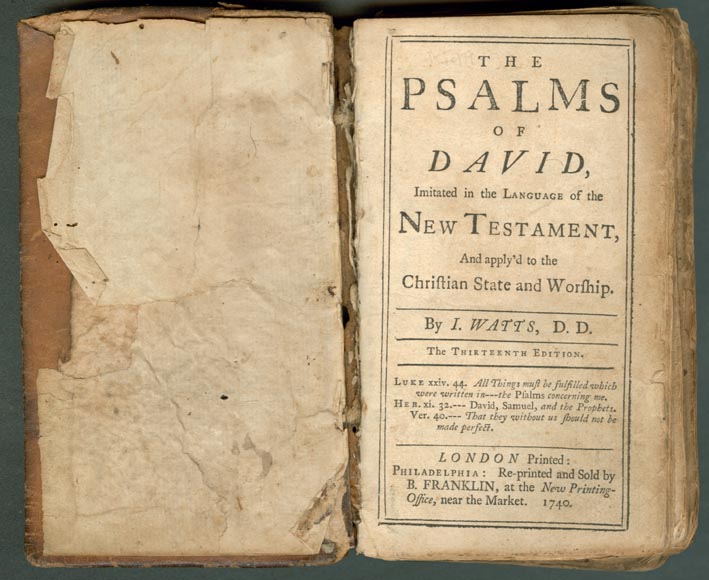
Isaac Watts - Amen


Call upon God, adore, confess,

Petition, plead, and then declare

You are the Lord's, give thanks and bless,

And let Amen confirm the prayer.

— Isaac Watts

Open Door

Sometimes we want to shut the door on the world and get a moment's peace. With all the pressures we live under, that's perfectly fair.
But in life, open doors are almost always more valuable than closed doors. In many societies it would be unthinkable to lock one's door. In Jewish communities it was a mark of honour to leave the door open and lay an extra place at the table so that the poor should feel welcome. It's really fear which stops us doing so now.
Maybe it's fear, too, or plain insularity, which often prevents us from opening our doors to those who are different from us. How frequently are our houses, schools, places of work really places of meeting?
We all know the commandment, first stated in the Torah then repeated by Jesus: "Love your neighbour as yourself". The trouble is that many of us practise it as if it read: "Love your neighbour who is like yourself". But that isn't what the Scriptures say.
Last year, we invited Muslim friends for an Iftar meal, with which the fasts of the Islamic month of Ramadan are concluded. We ate in our Sukkah, a hut roofed with leaves in which Jewish people live during the festival of Tabernacles. It was a lovely occasion, full of food, laughter and questions: "What do Jews do when..?" "How do Muslims celebrate if..?" Today Ramadan and Tabernacles again coincide.
When our doors are shut to people different from ourselves, we cease to be a society and become a proximity of semi-ghettos, where distrust and fear inevitably grow.


God, help us to open the doors of our homes and offices, school rooms and meeting rooms, minds and hearts to many and different people.

Radio 4 Jonathan Wittenberg

Prayer for the Day


Two of the most important phrases in any language are "Thank you" and "I'm sorry". All our relationships depend on the ability to say them and mean them.
No action is too small for a "thank you". When we don't give it, we treat others as tools.
None of us is too important to say sorry. We should say it to our children when we're wrong; it shows humanity, - and humility.
Saying sorry is on the minds of Jewish people because Saturday was the Day of Atonement.
If apologising is hard, forgiving is even harder. I don't believe in 'forgiven and forgotten'. The mind doesn't work like that; we remember plenty of things we wish we didn't. Equally, there are many matters in any human life, and in history, which mustn't be forgotten. Forgetfulness condemns us to repetition, of our worst mistakes and greatest atrocities.
At the heart of forgiveness is the ability to let go of anger and bitterness. That's why, as Judaism teaches, we can only forgive wrongs done to ourselves. Otherwise, forgiveness is a meaningless word.
That still leaves plenty for us to do. We all bear wounds, inflicted by other people or by life itself. Do we nurse thoughts of vengeance? Or do we try to accept and comprehend, or even enter in imagination into the minds of those who hurt us and, without justifying their deeds, ask "Why?"
I admire those who use their very wounds to create understanding and healing, like those bereaved Israeli and Palestinian parents whose grief has brought them together. They don't forget, or romantically forgive. They listen and strive for peace.


God, give us the courage to make our hurts our teachers.


Jonathan Wittenberg Radio 4

Power of Prayer

You know the value of prayer; it is precious beyond all price. Never, never neglect it.
-- Buxton, Thomas


In 1808, Buxton's Hanbury family connections led to an appointment to work at the brewery of Truman, Hanbury & Company, in Brick Lane, Spitalfields, London. In 1811, he was appointed a partner in the business, now renamed Truman, Hanbury, Buxton & Co; he later became sole owner of the company.
Although he was a member of the Church of England, Buxton attended Friends meetings with the Gurneys and became involved in the social reform movement being led by Friends. He helped raise money for the weavers of London who were forced into poverty by the factory system. He provided financial support for Elizabeth Fry’s prison reform work and became a member of her Association for the Improvement of the Female Prisoners in Newgate.
Buxton was elected as a Member of Parliament for Weymouth and Melcombe Regis in 1818. As an MP he worked for changes in prison conditions and criminal law and for the abolition of slavery. He also opposed capital punishment and pushed for its abolition. Although he never accomplished this last goal during his lifetime, he did help to reduce the number of crimes punishable by death from more than two hundred to eight.
Thomas and Hannah Buxton had eight children. Four of them died of whooping cough during a five-week period around April 1820. Another one died of consumption some time later.


The slave trade had been abolished in 1807, but Buxton began to work for the abolishment of slavery itself. He helped found the Society for the Mitigation and Gradual Abolition of Slavery (later the Anti-Slavery Society) in 1823. He took over as leader of the abolition movement in the British House of Commons after William Wilberforce retired in 1825. His efforts paid off in 1833 when slavery was officially abolished in the United Kingdom. Buxton held his seat in Parliament until 1837.

Prayer of the Day

I have great difficulty throwing things away. It may be because I grew up just after the 2nd World War when things were hard to get. But whatever the reason, I hate to discard anything unless it's clearly broken beyond repair. If it's still usable - it stays.
Every now and again I will have a go at clearing out. Unfortunately I have to get really worked up to do it and every time I end up chucking out something I really need just one week later.
But it's not only my cupboards that are overflowing with stuff from a bygone age. My head is full that sort of thing too. Attitudes that made perfect sense 40 years ago, but really don't have any use now. Definitions that were relevant when I was young today are meaningless. And I am sure I'm not alone. Many of us, brought up to look on security and stability as a kind of holy grail, find it difficult to relate to a world where a job for life isn't so much a rare thing as a bad one. Brought up to value good manners and respect for others, we can have difficulty working out what they look like in the context of the informal and casual way people now relate to one another.
We all need to be willing to review our values and our attitudes from time to time and be brave enough to let go of those that we don't need any more so that we can concentrate on the things that are really important. There are times when change can be a good thing, But in clearing out we need to be careful that we don't throw away something we do actually need.
When we are struggling to keep up with and handle the changes going on around us it's especially comforting to be able to turn for reassurance to a God Who doesn't change. His values are eternal but even they need to be expressed in a way that reflects the age in which we live.

Lord, Use us to show Your love to the world and help us to clear out of our hearts and minds any attitudes, values and prejudices that get in Your way. Amen

George Craig - Radio 4